
Out With It!
I designed a mobile party guessing game and used Figma MCP with Codex to help build it. I led the visual direction, user experience, and gameplay decisions, reviewing and refining the implementation as it took shape.
Visual direction, UX & gameplay design
Current
Android release pending approval

 A little guessing.
A lot of good company.
A playful visual system carried from Figma into a playable party game.
Flutter & Dart · Figma MCP & Codex
Android & iOS shared codebase
From a design system to a working game.
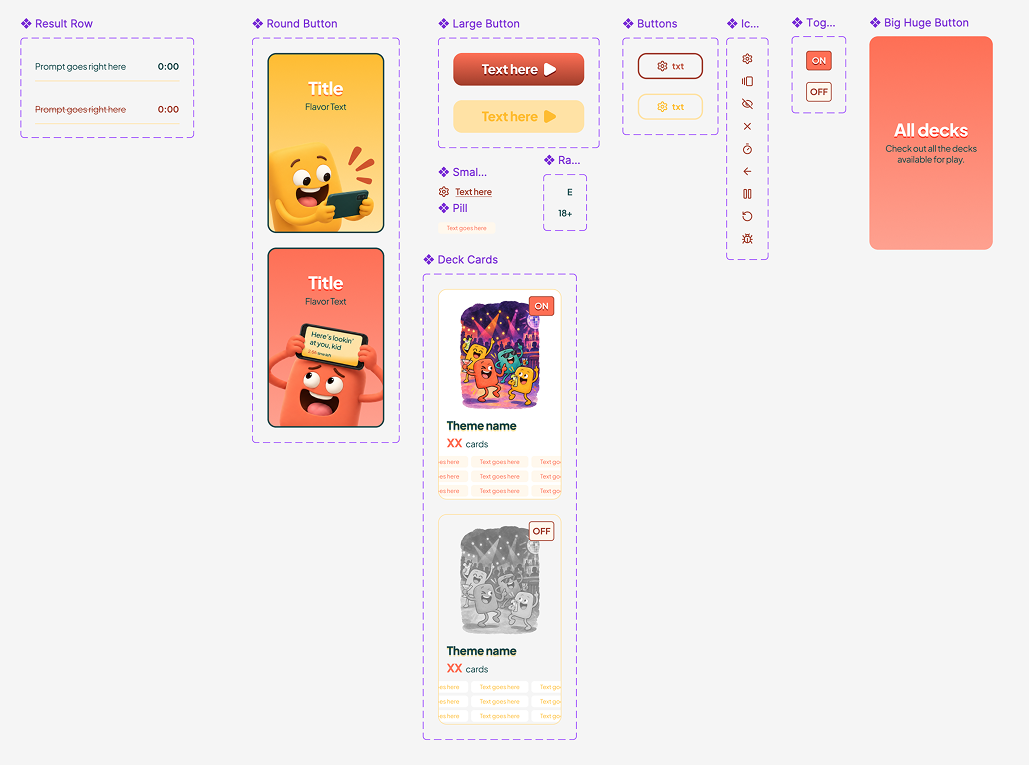
I wanted to explore how I could guide AI from an established design system to a fully functioning app while keeping control of the creative vision. I led the visual direction, user experience, and gameplay decisions, using my Figma designs as the foundation.
Through Figma MCP, I gave Codex access to the design context and guided it in translating my layouts, typography, colors, and components into working screens. I reviewed and refined the implementation throughout, shaping deck selection, game controls, feedback, motion, and sound.
Set up a round. Get everyone playing.
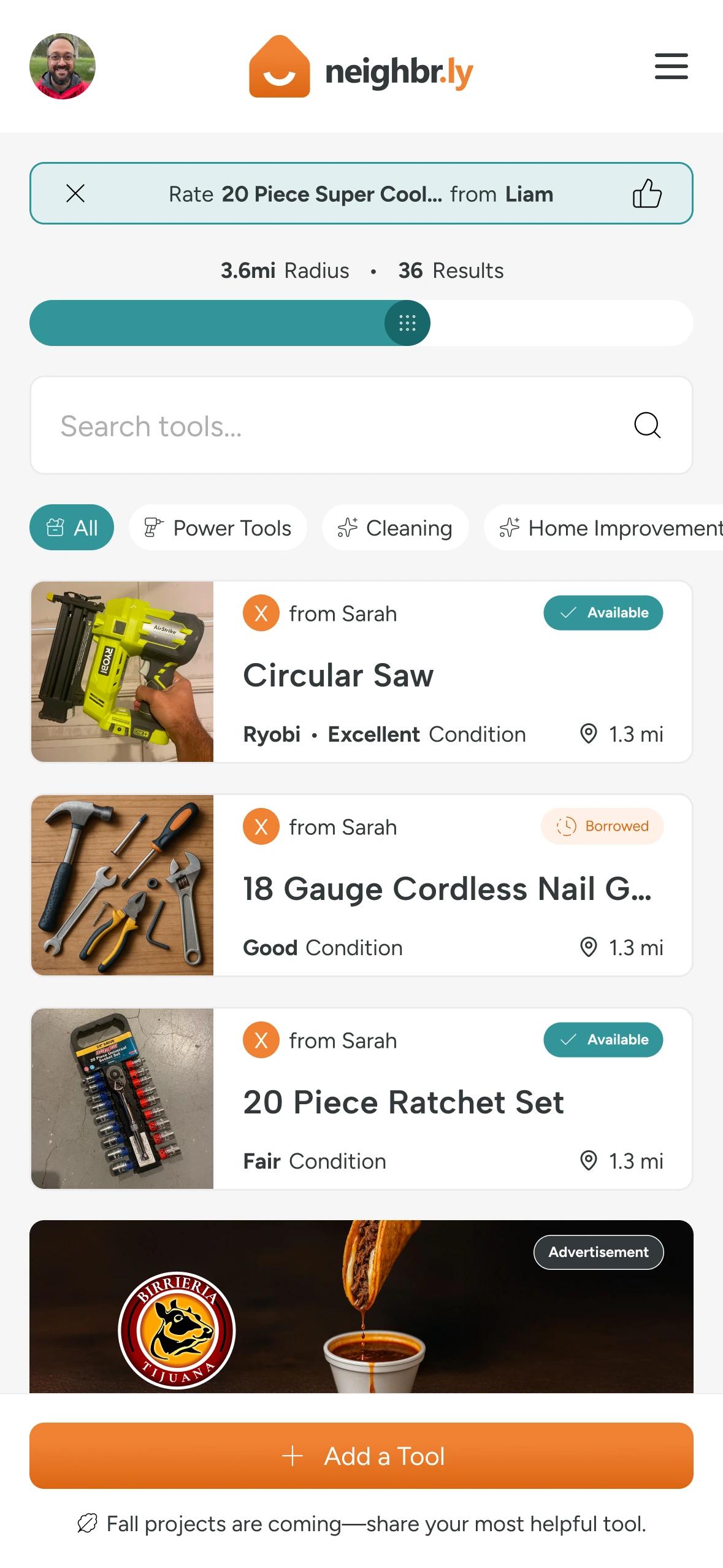
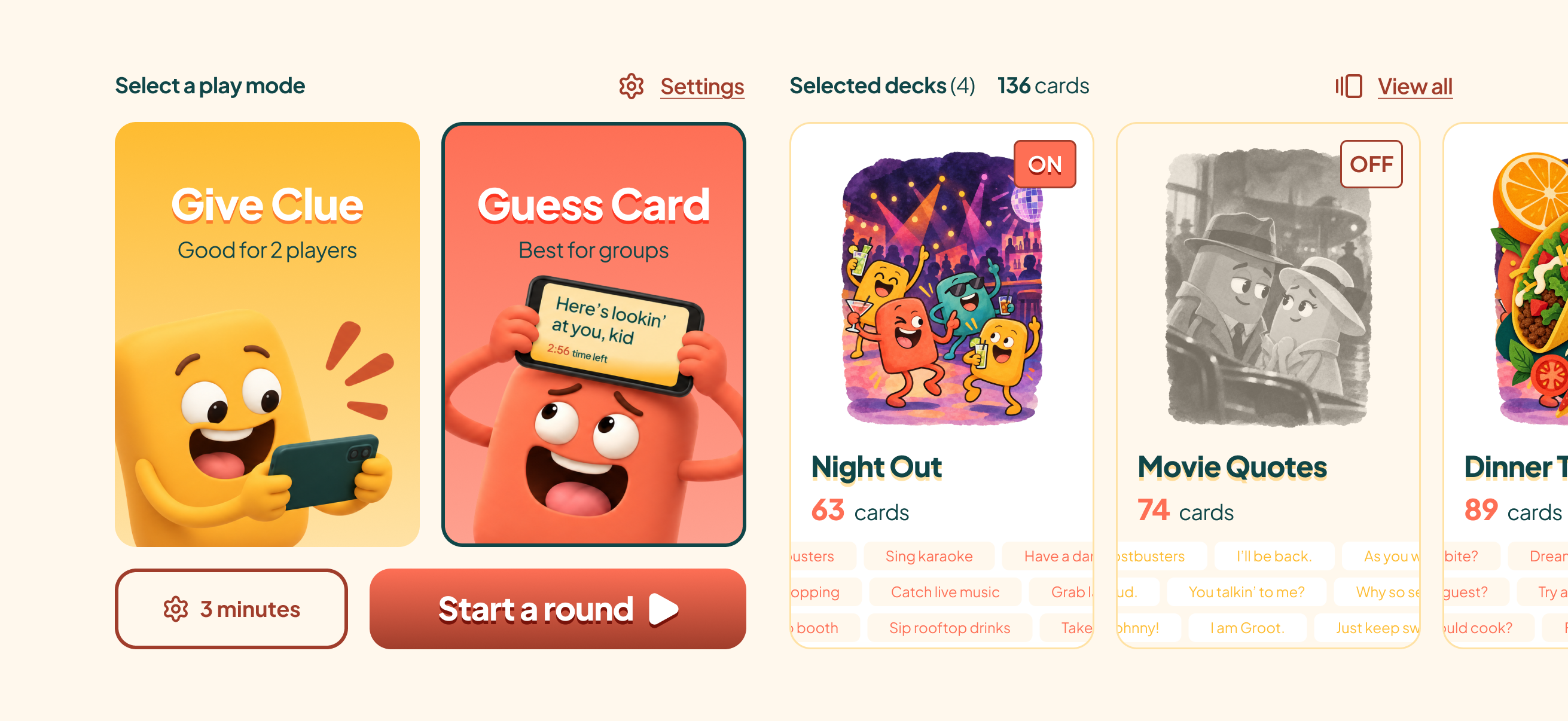
The experience brings play modes, deck selection, and round timing together before the game begins. Players can give clues or guess cards, with tilt and touch controls supporting different ways to play.
Keep the round moving. Make the results useful.
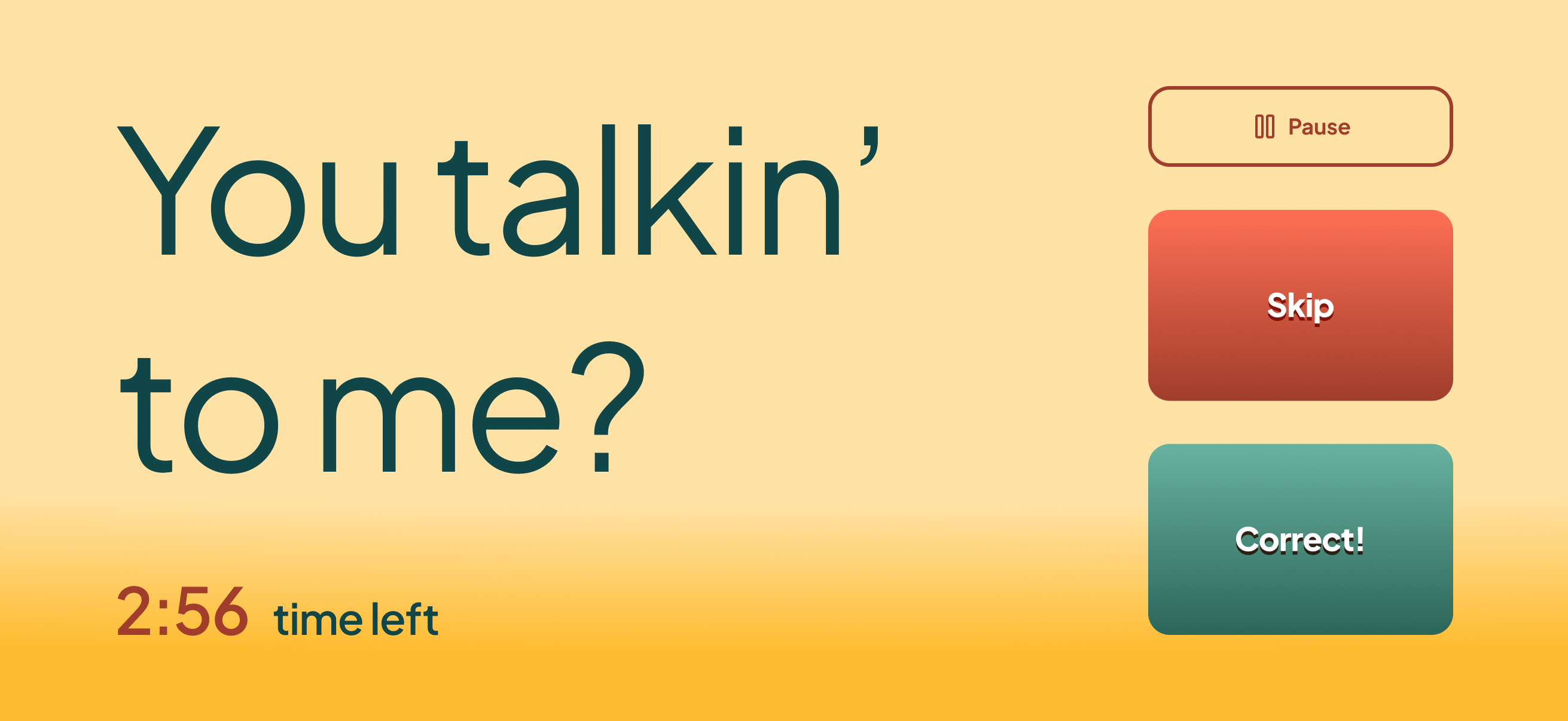
Built with Flutter and Dart, the game uses a shared codebase for Android and iOS. Timed rounds, tilt and touch controls, customizable decks, score correction, and saved results are all available offline.
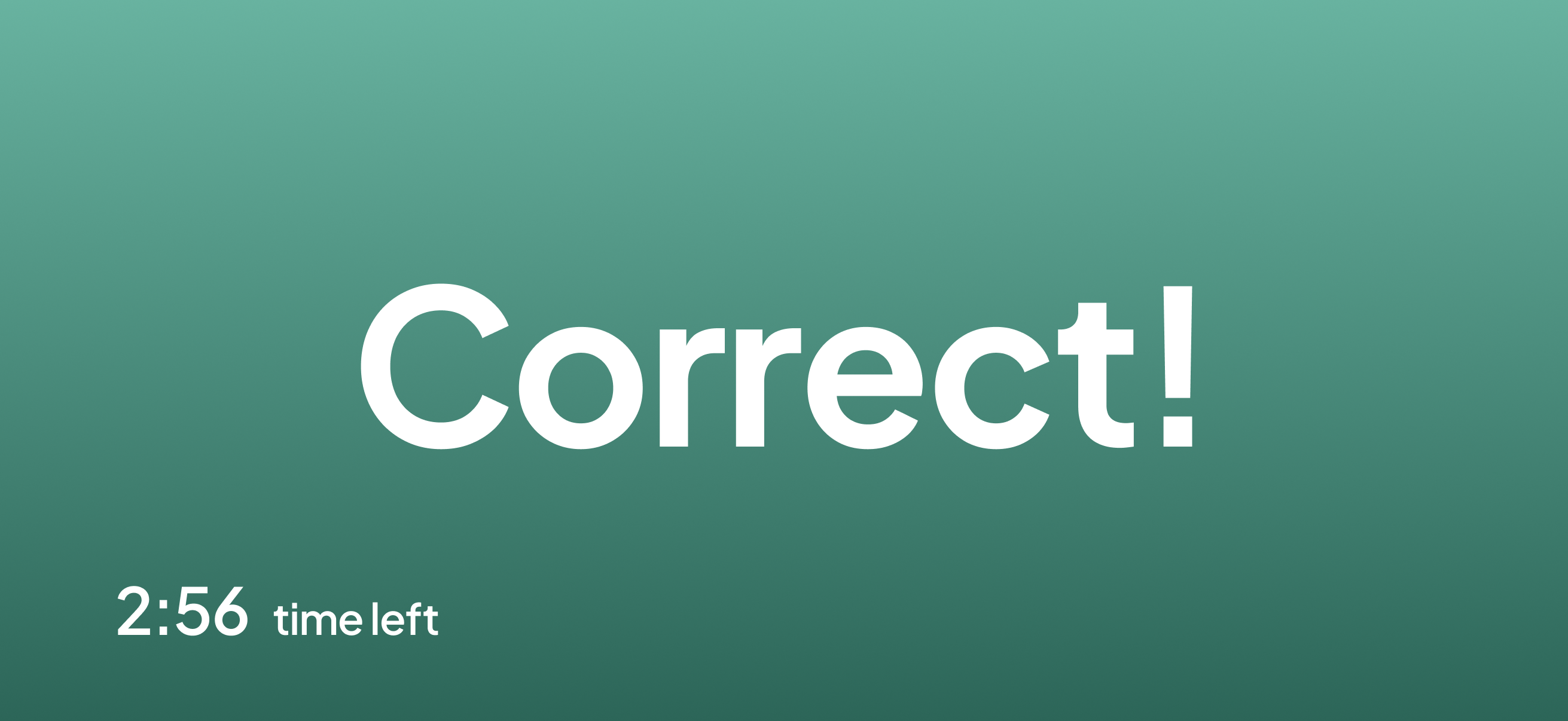
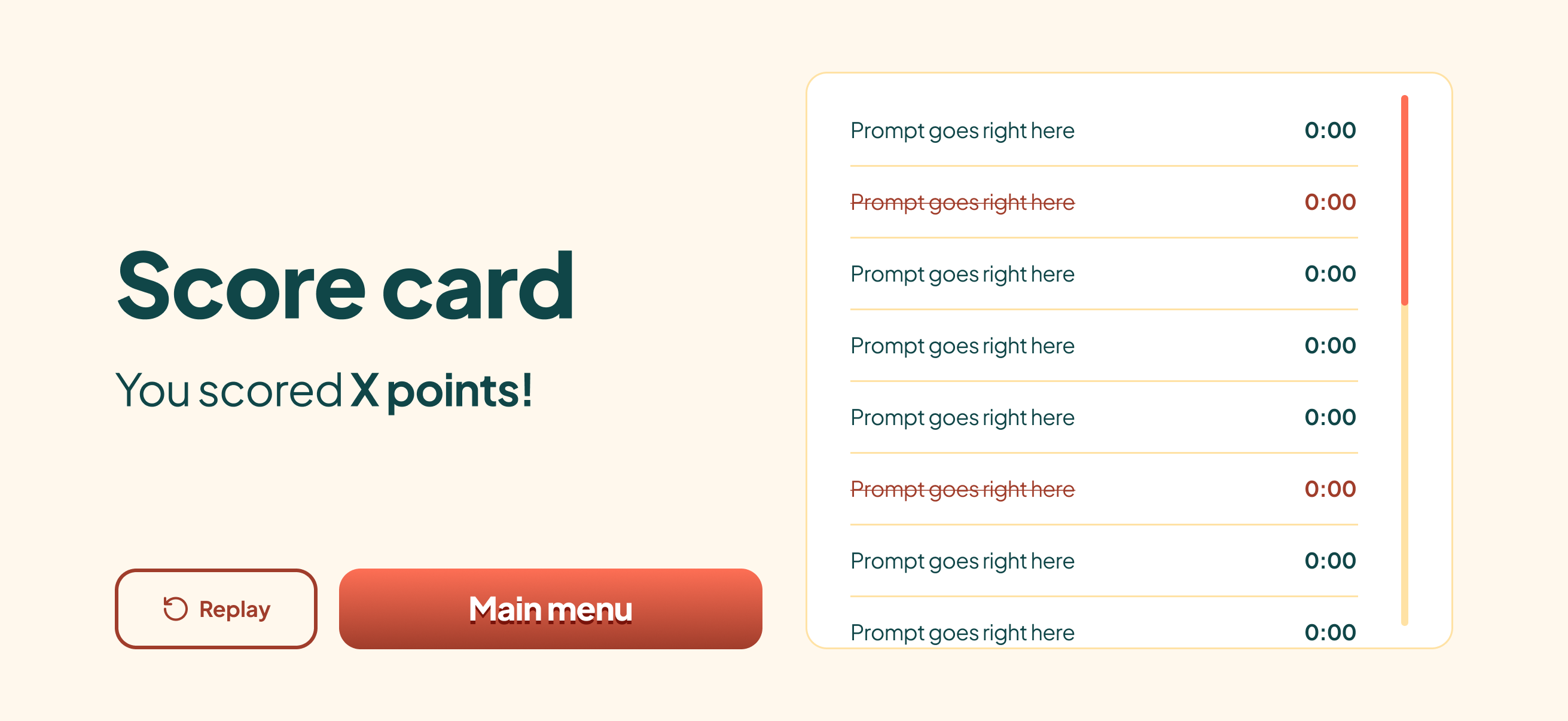
I refined the feedback around correct guesses and skips, then carried that clarity into the scorecard so players can review and correct a round’s results.

A playable app. A clearer way to work with AI.
Iterative design reviews, automated checks, and device testing helped bring the experience from prototype to a playable app. The Android release is currently pending approval.
This project helped me learn how to guide AI from my Figma designs to a working app. I set the direction and reviewed the results, refining the controls, feedback, and details of play along the way. I’m still learning how to make that process more reliable.